HISTORY

a response to the broken promises:
A LABOR ORGANIZATION OF A NEW TYPE
Today’s economy delivers the same precarious condition to employees in nearly every field – they increasingly feel as if they’re “working twice as hard for half as much.” For more than 50 years, EASTERN SERVICE WORKERS ASSOCIATION (ESWA) has been forging a new path in the fight to end poverty, uniting low-income workers and others concerned about the growing gap workers experience between income and expenses. Without paid staff or government funding, ESWA has saved countless lives through the delivery of free-of-charge benefits generated completely through volunteer participation – while simultaneously building organization to address the cause of poverty at its roots. The time for action to end poverty is NOW and we urgently need your help to expand!
The conditions necessitating ESWA’s organizing drive go back to the early 1960s, when the frustrations of Blacks forced into low-paying jobs exploded into a Rochester urban uprising on July 24, 1964. The city and nation were forced to accept that the cause was intolerable social and economic conditions among Rochester’s low-income and minority communities.
This was followed by a huge number of federally-funded and state-funded anti-poverty agencies – at one point there was one poverty agency for every 17 city residents – that nonetheless failed to bring about lasting change in poverty conditions for Rochester's working and unemployed poor.
Going unaddressed by the plethora of government-funded “anti-poverty” measures were fundamental changes to the local and national economy – furthered by government policies – that both increased hardship among our region’s lowest-paid workers and hollowed out our middle class. Tax breaks, deregulation and stock market “reforms” incentivized major employers like Kodak and Xerox to accelerate their elimination of more than 80,000 local, mostly better-paid production jobs – along with the consumer dollars that had accompanied them. Meanwhile, the education and medical care economy that has taken its place produces billions of dollars in profit while affording a meager existence to the workers essential to it. Today, Rochester’s service workers produce nearly $50 billion in value annually, but keep just a pittance of the value of their labor.
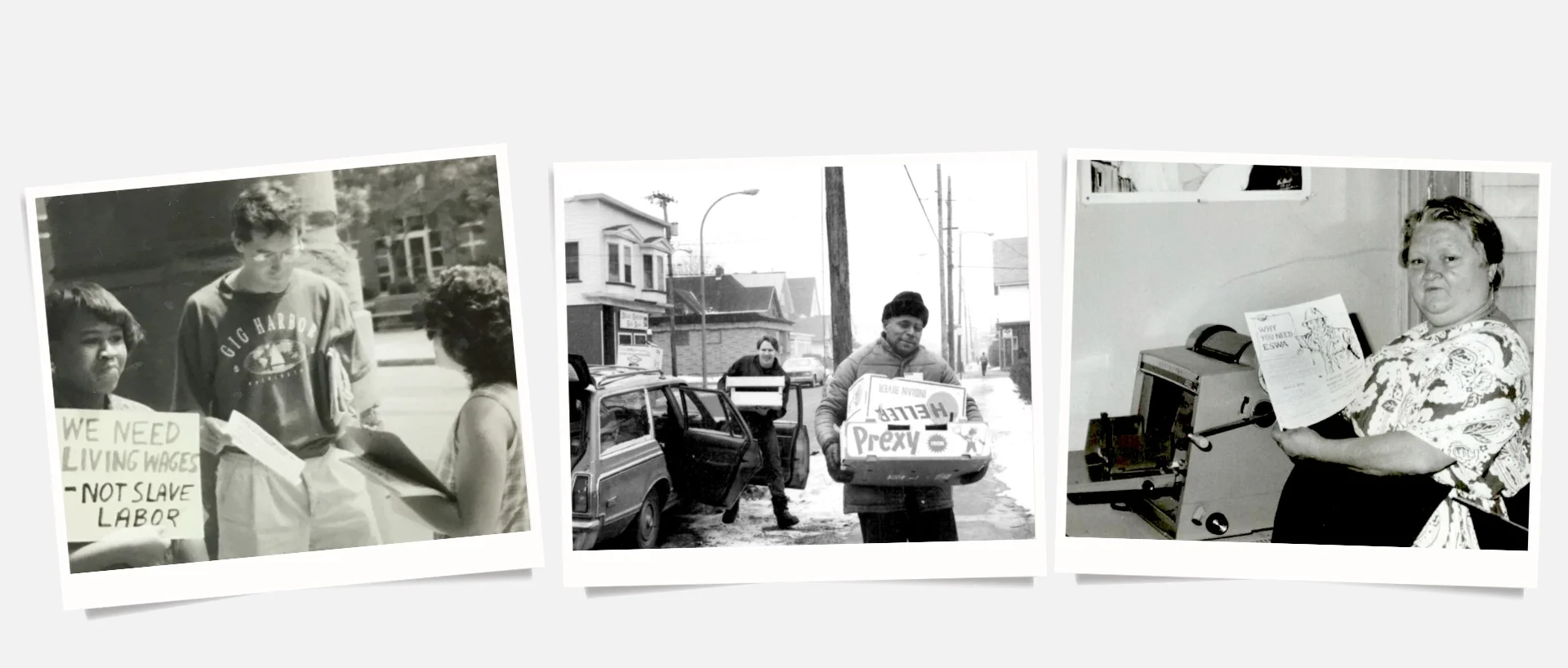
ESWA has spent five decades uniting service workers and building alliances with small business owners, professionals, concerned residents, students, clergy and others with past experience in efforts to address the poverty conditions facing service workers. Below is a brief overview of ESWA’s history in Monroe County. To get the whole story – and to create new history – come down to ESWA’s office and participate in the effort to build real solutions for our area’s lowest-paid workers!
Our Story
Milestones in ESWA History
1976
ESWA Begins in Rochester
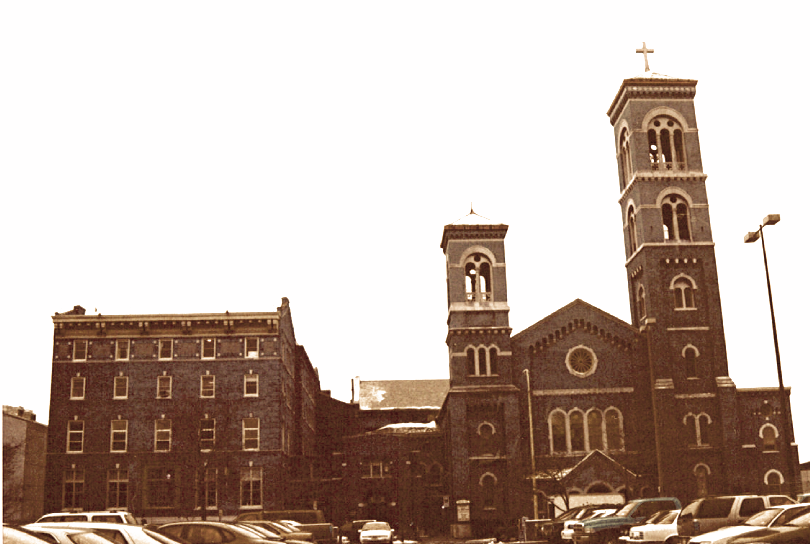
ESWA opens the first office in donated space at Downtown United Presbyterian Church, hosted by its minister at the time, Rev. David Bos. Rev. Bos was part of an advisory committee of low-paid service workers and other concerned community members who had neither “bought in” nor “sold out.” The goal: to unite a membership association of, by and for service workers. Door-to-door canvasses and house meetings begin.

1979
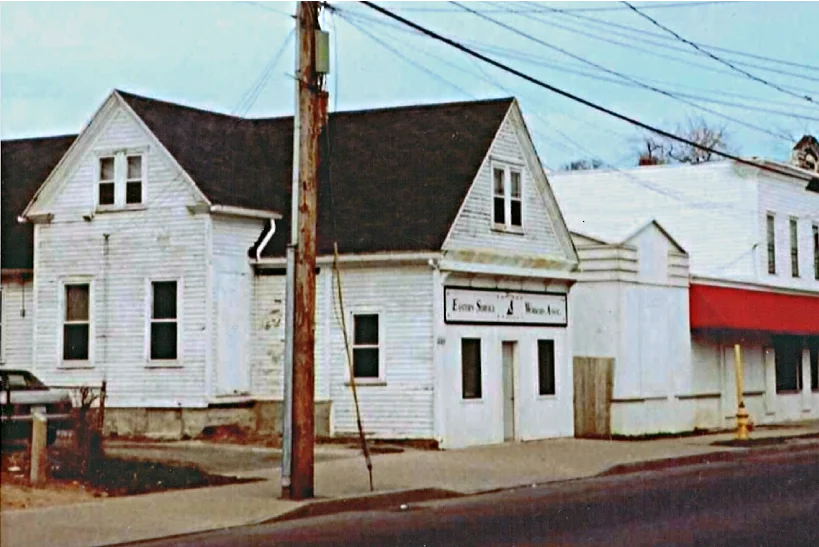
First Permanent Office
ESWA obtains its first permanent office at 244 Bay Street. Membership grows exponentially in the North Marketview Heights section of the city.


1980
ESWA Responds to Kodak’s Decline
ESWA responds to growing poverty created by the decline of Kodak, Xerox and other major employers, developing new membership drives as formerly employed industrial workers join the ranks of low-paid service workers. At more than 60,000 workers, Kodak alone employed more manufacturing workers than the entire greater Rochester area has today. Most of these jobs provided pensions and other benefits unavailable to today’s workers. ESWA’s self-help benefit program expands to fill the gap.
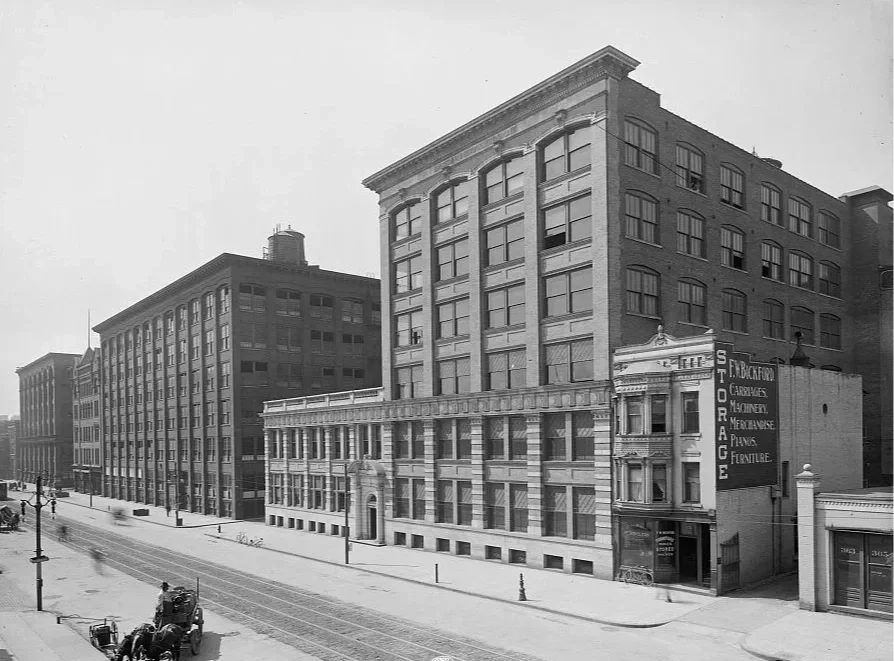
State Street factory and main offices of Eastman Kodak Company
1992
Rodent Control Victory before the Monroe County Legislature
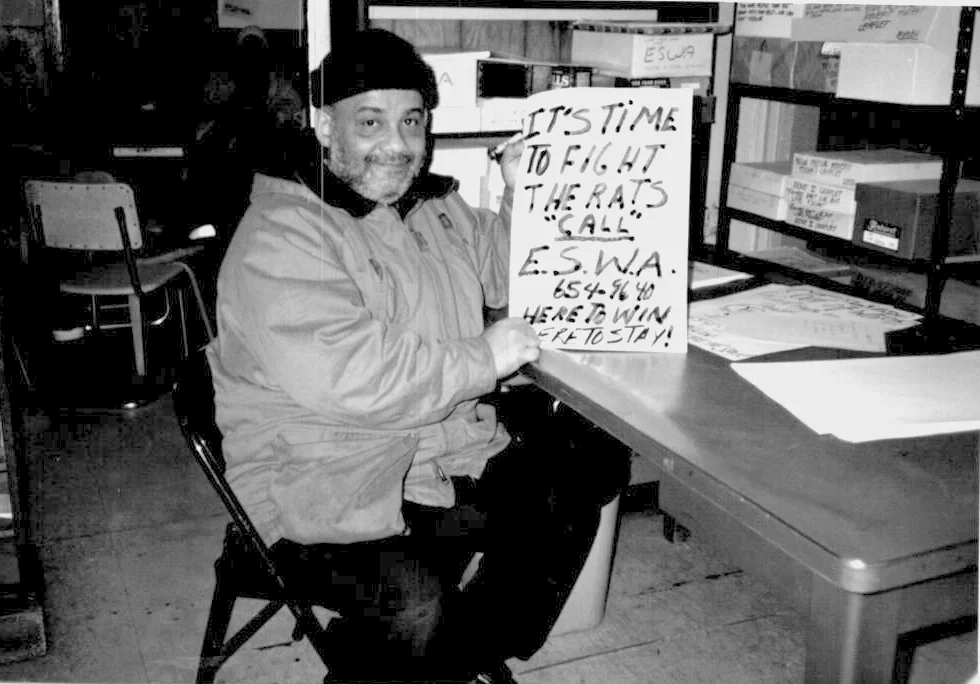
Through conducting a community-wide campaign and testifying at a June 9, 1992 hearing, the Monroe County Workers Benefit Council (WBC), the membership leadership council of ESWA, compels the Monroe County legislature to restore rodent control funds and to assign personnel to conduct stepped-up baiting in membership neighborhoods. The campaign was urgently needed because the government had cut funds for extermination at the same moment that major employers were downsizing thousands of workers, making Rochester’s neighborhoods much poorer. The resulting explosion of the rat population threatened the health of working families.
1998
Campaign Against Enterprise Zones
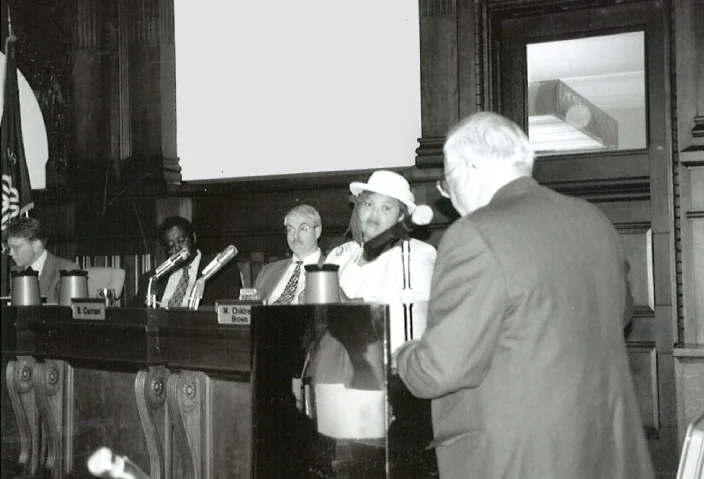
In preparation for testimony at a series of City Council meetings, the Monroe County Workers Benefit Council (WBC) galvanizes support among small business owners, union leaders, church leaders and others in a campaign against the false promise of “Enterprise Zones” and other similarly-named trickle-down, cheap labor schemes.
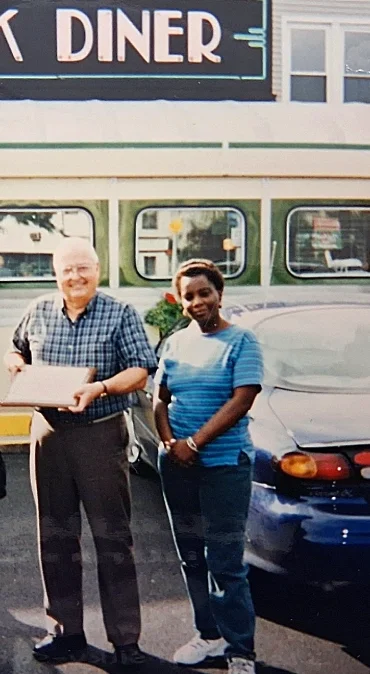
Highland Park Deli and Donuts Delite owner Bob Malley — an ESWA Advisory Committee member — is one of the local business owners who join a WBC delegation to testify against state “Empire” zone expansion, saying that local businesses depend on the local workforce to earn a living, not a dying, wage.
2006
ESWA Builds New Office
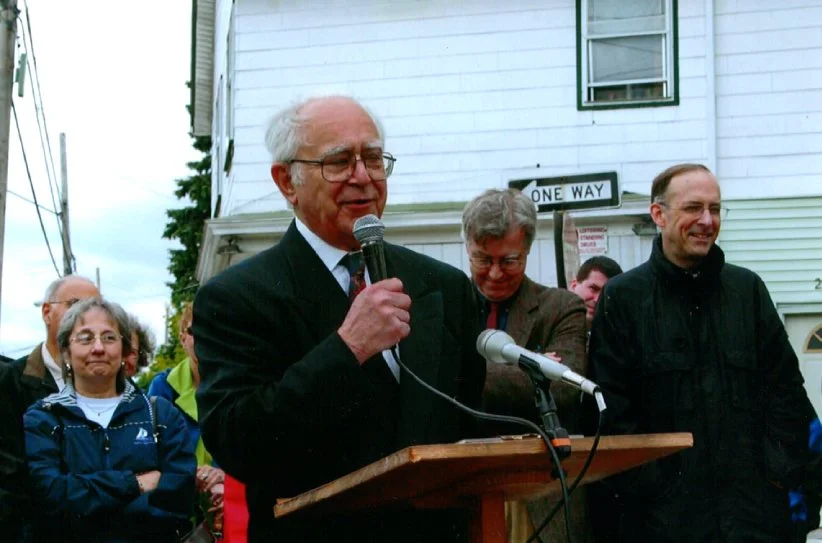
Under the leadership of long-time ESWA Operations Manager Mark Horn, ESWA recruits a “dream team” of builders, volunteers and construction supply companies – including renowned volunteer architect Pete Romeo (at podium) and local firm LeChase Construction – and proceed to build our new Office Central from the ground up.
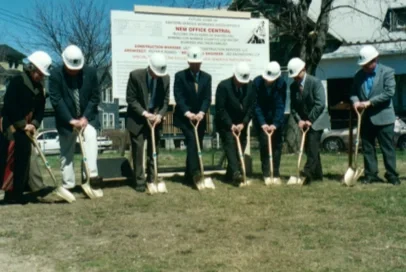
Ground breaking of the new ESWA Office Central building project.
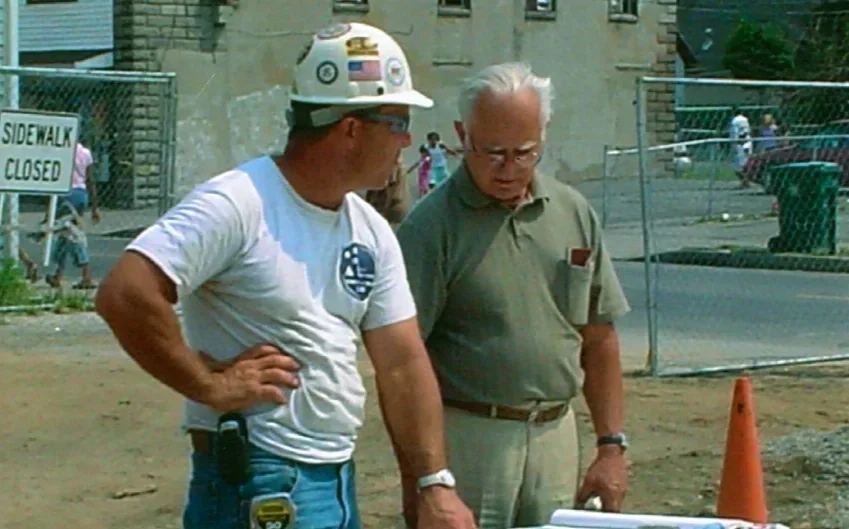
LeChase Site Supervisor Ed Polle (left) and volunteer architect and ESWA Advisory Committee member Pete Romeo (right) review the building plans.
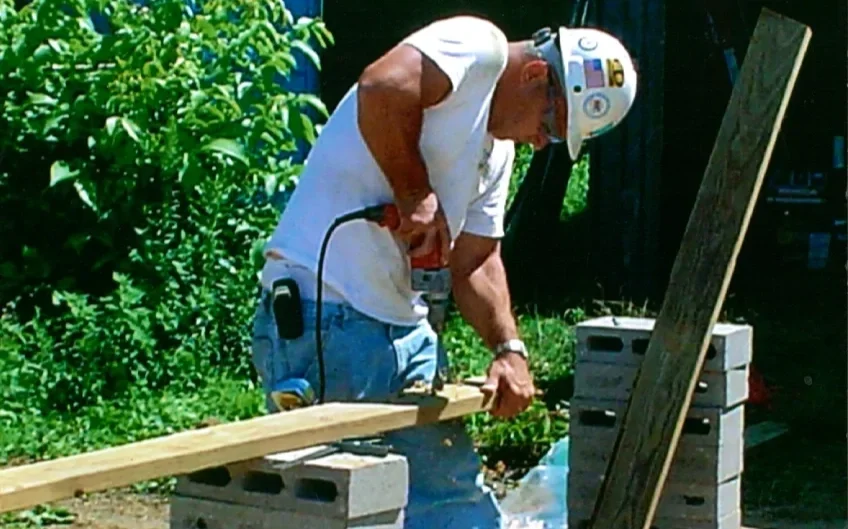
LeChase Site Supervisor Ed Polle takes a hands-on approach to supervising the building construction.
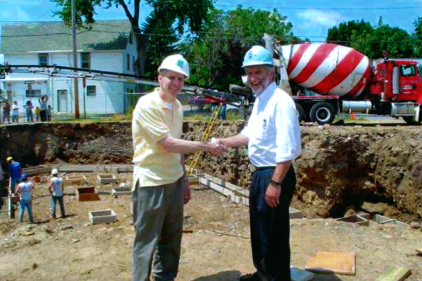
Advisory Committee President Mark Horn (left) and Tom Weckesser (right), owner of Weckesser Brick, who donated more than 18,000 bricks for building construction.
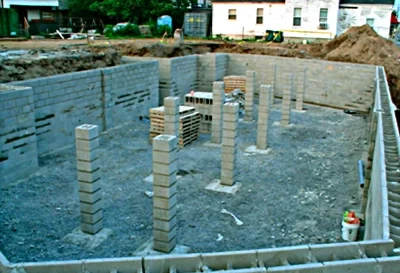
Building of the foundation.
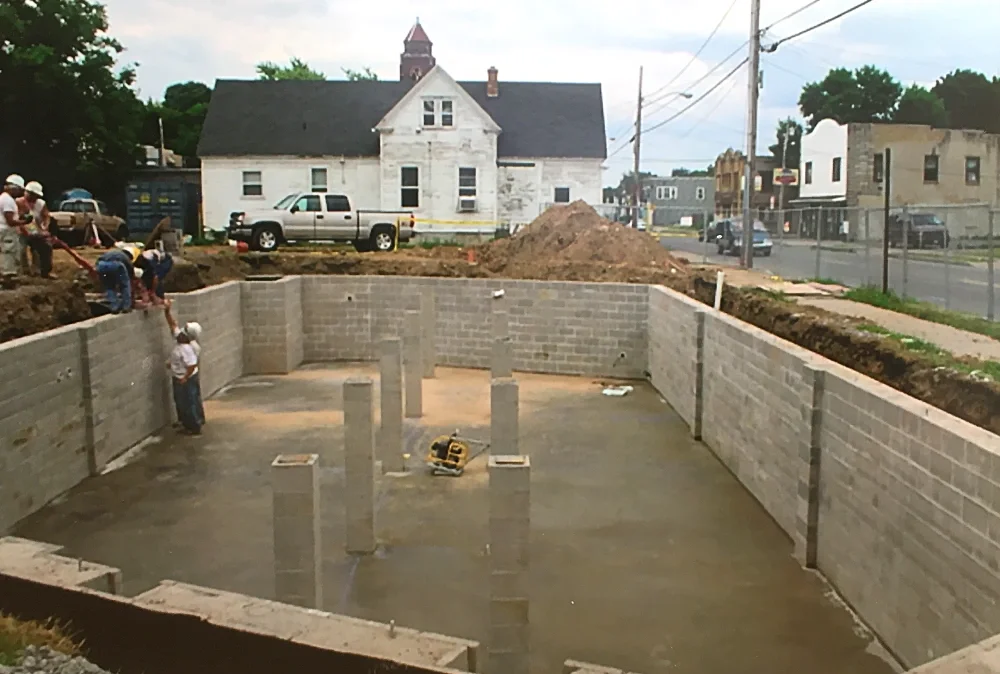
The foundation takes shape.
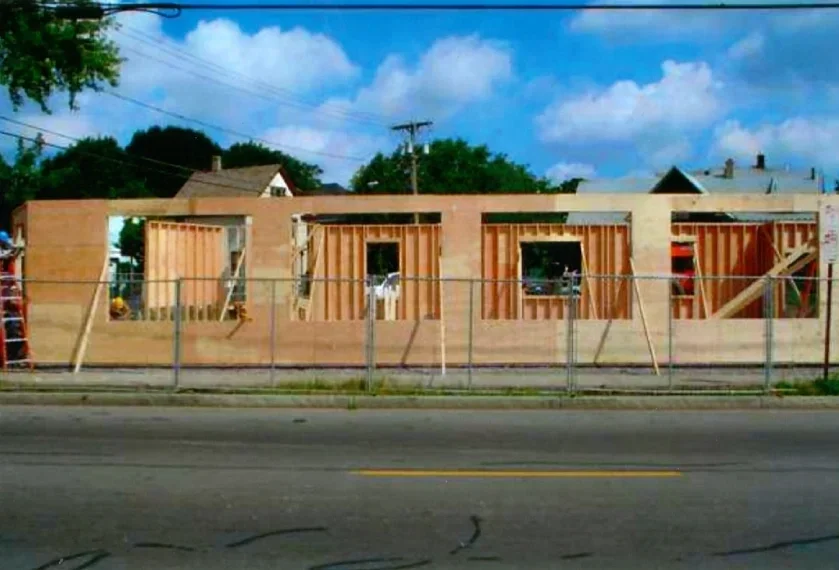
The new Office Central as its walls go up.
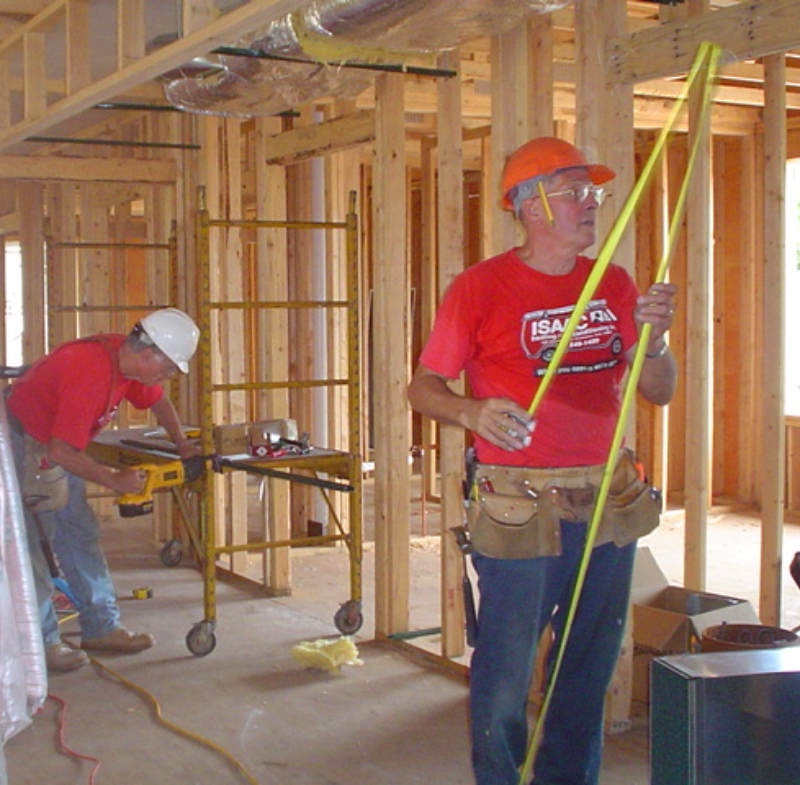
Jim Isaac (right), owner of Isaac Heating and Air Conditioning, personally volunteered to install all the donated heating and air conditioning equipment.
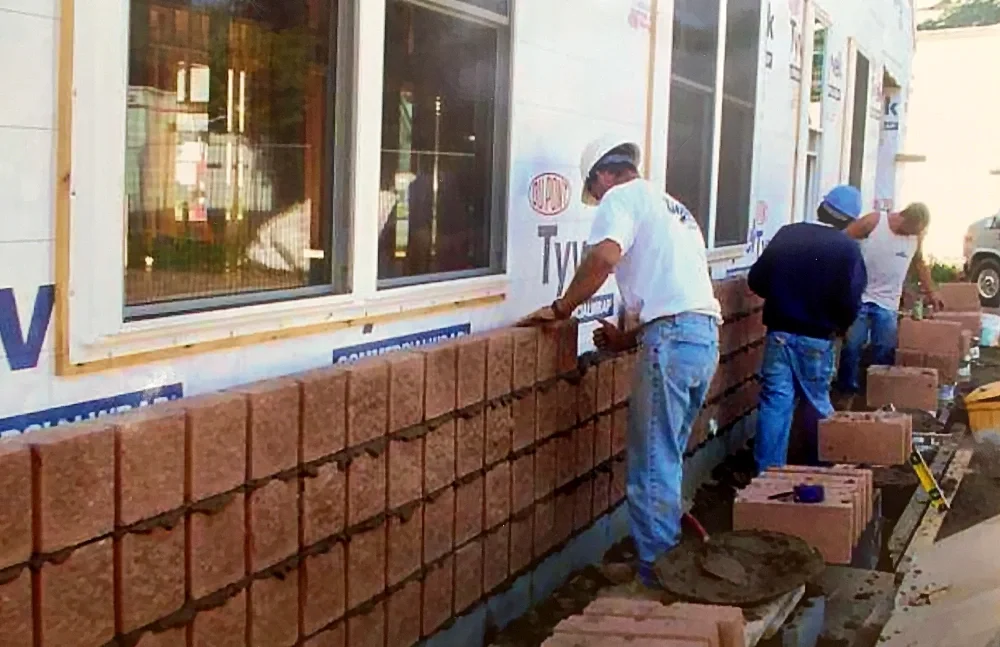
Weckesser's donated bricks going up!
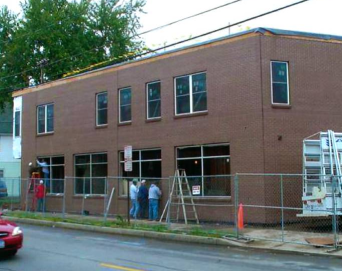
A completed exterior for the new office.
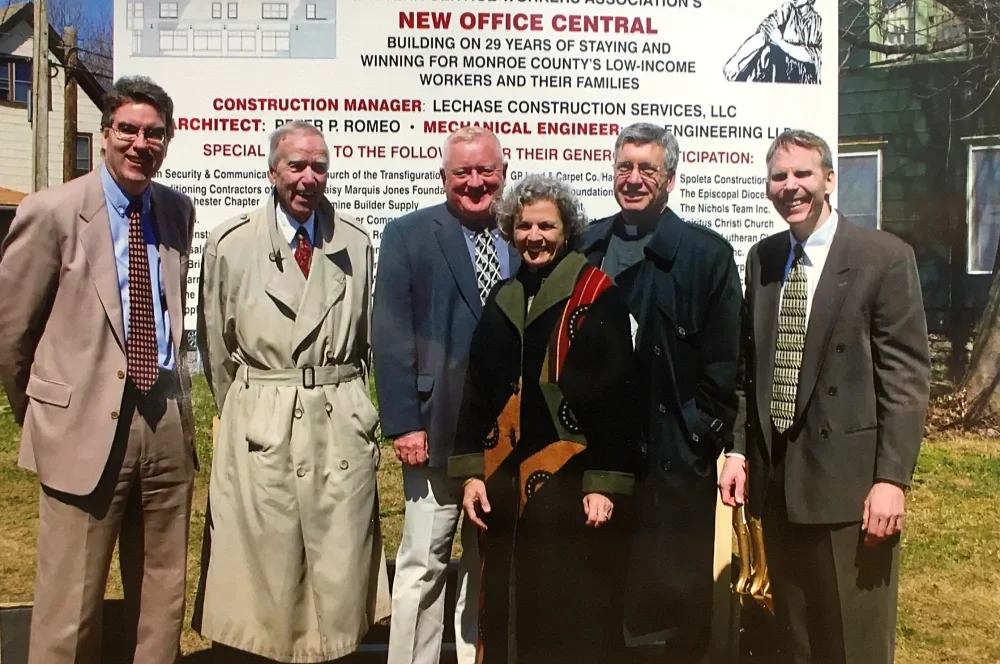
Key ESWA building project supporters (left to right): John Harris, George Harris, Roger Gardner, Annette Weld, Rev. Jeff Hedin, Advisory Committee President Mark Horn.
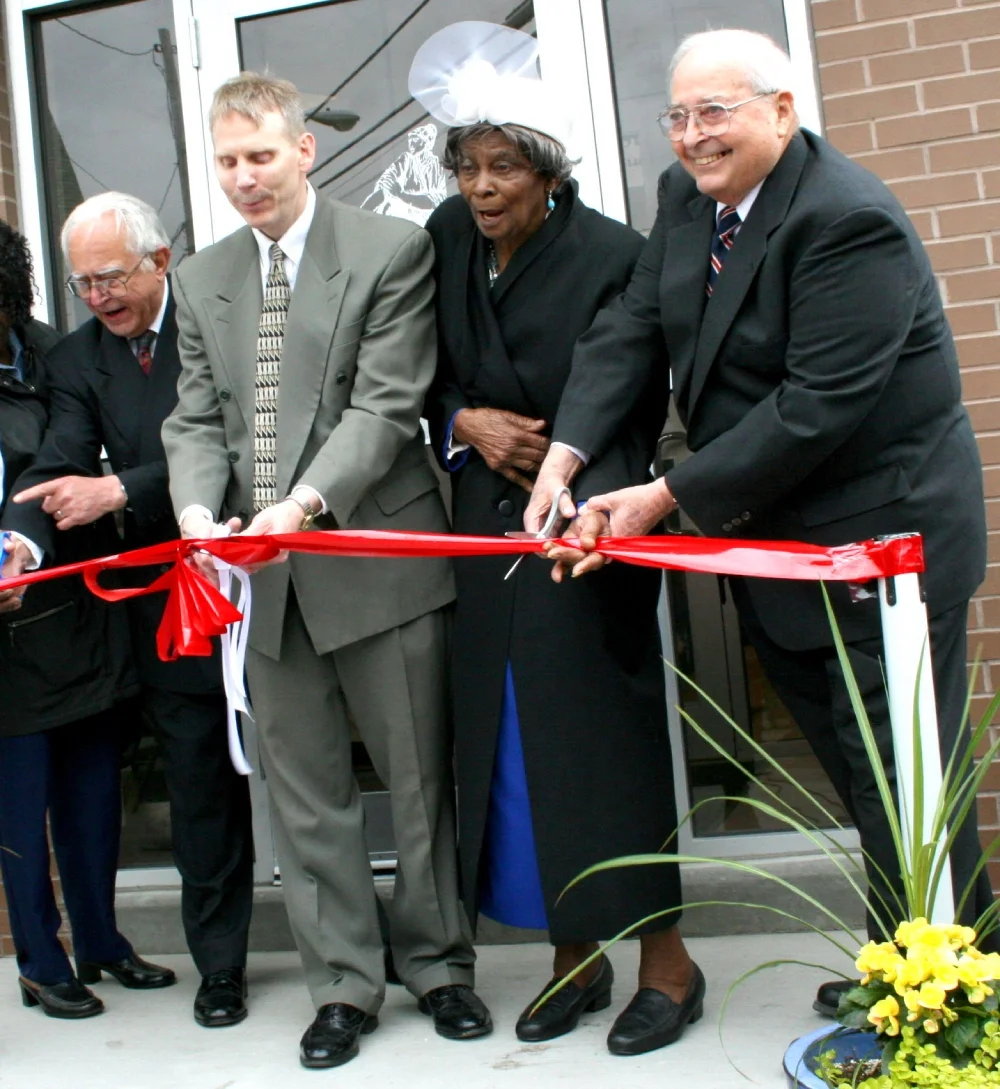
The ribbon cutting ceremony (from left to right): Volunteer architect Pete Romeo, ESWA Advisory Committee President Mark Horn, founding ESWA member Pankie Hines and ESWA Advisory Committee member Bob Malley.
2009
ESWA Renovates Benefit Office & Expands Benefit Program
ESWA’s “dream team” joins with additional area contractors to transform our original 244 Bay Street property into a dedicated Benefit Office. This kicks off expansion of weekly supplemental healthy food distributions, and attracts additional volunteers to participate in ESWA’s Preventive Medical Benefit, Non-Emergency Dental Benefit, Clothing Benefit and more.
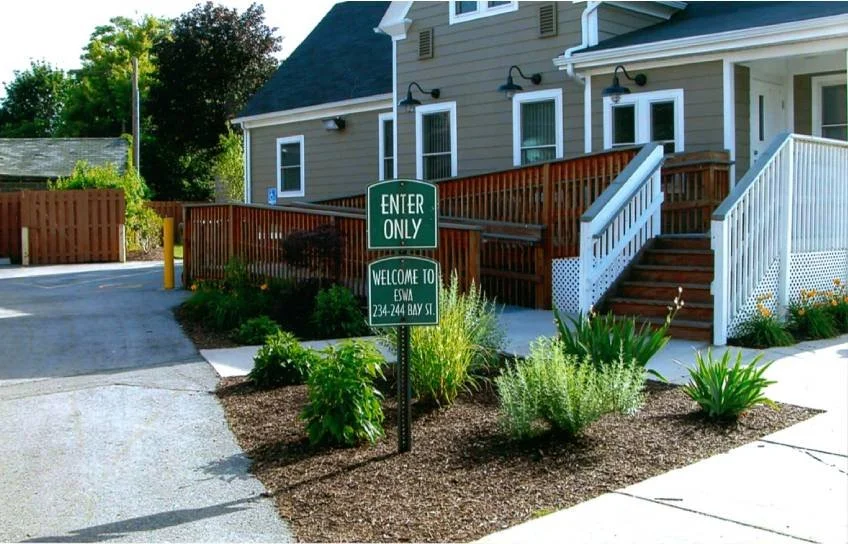
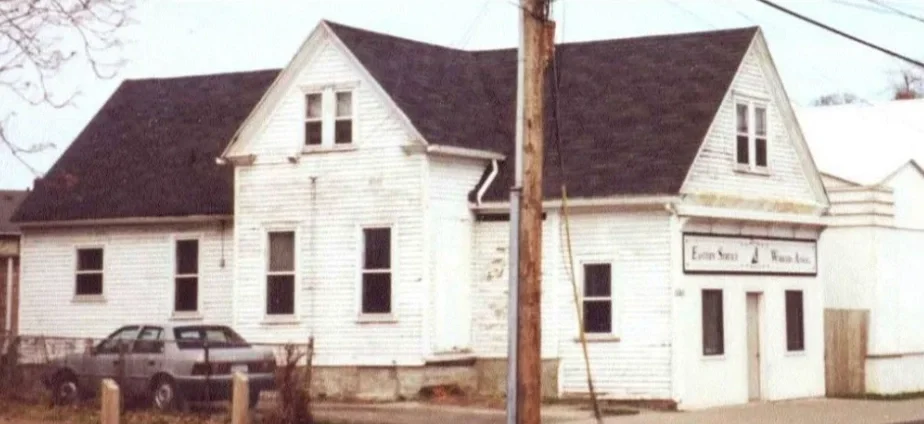
The building that was previously ESWA's Office Central and has now become the Benefit Office.
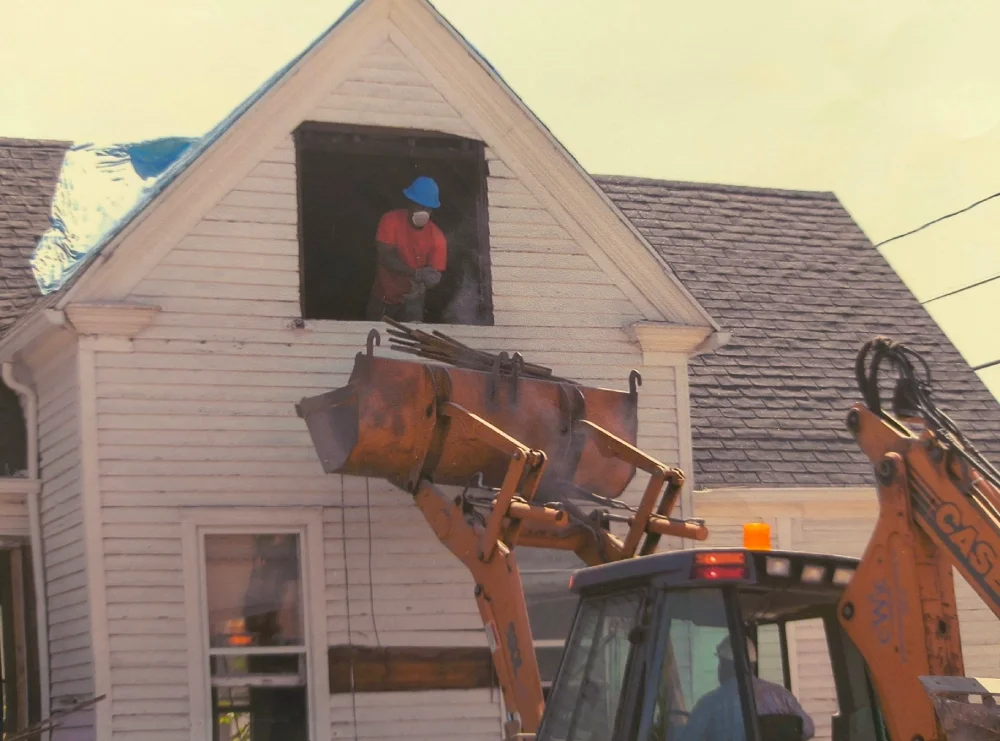
The renovation begins!
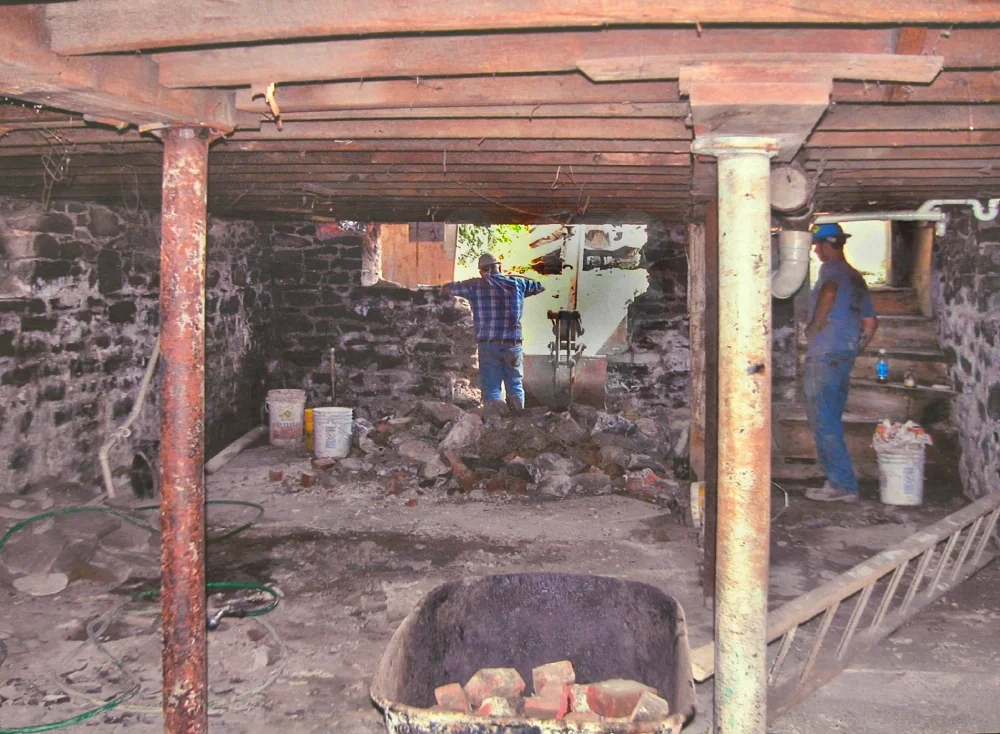
Major professional upgrades and repairs were made throughout the building.
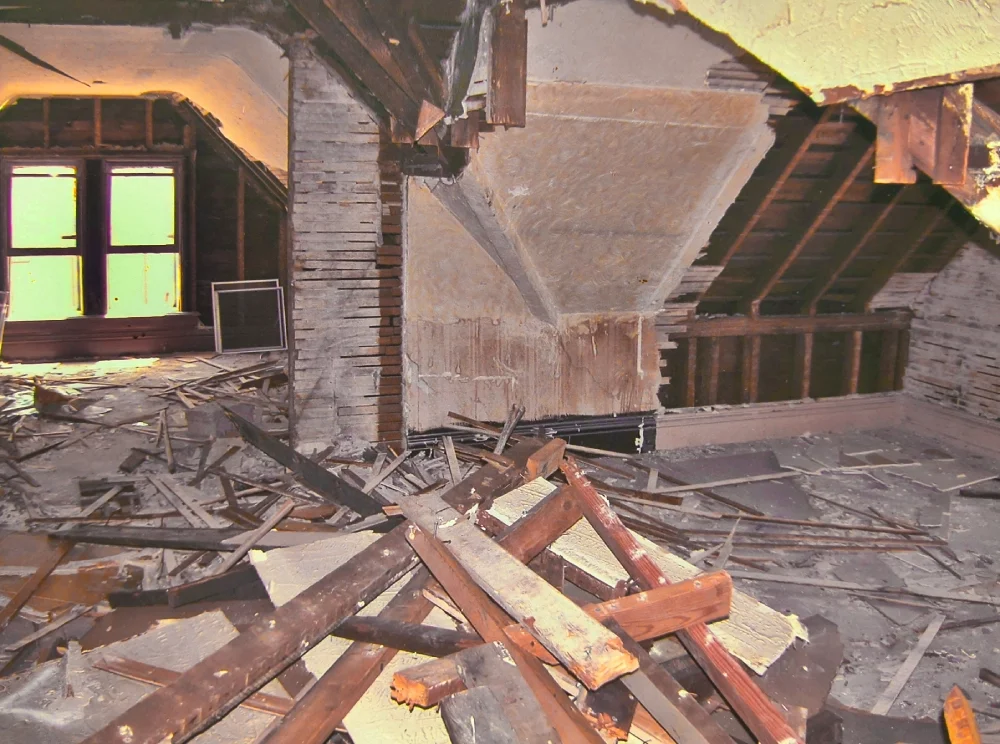
The project required large amounts of demolition.
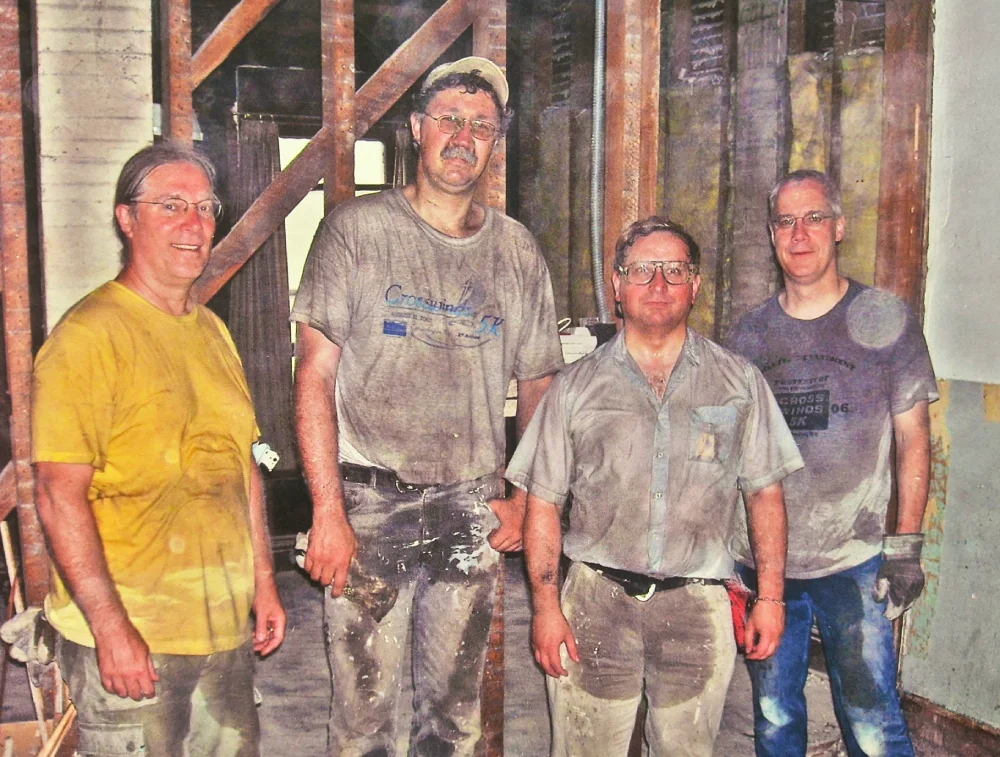
Some of the crew members who joined the project.
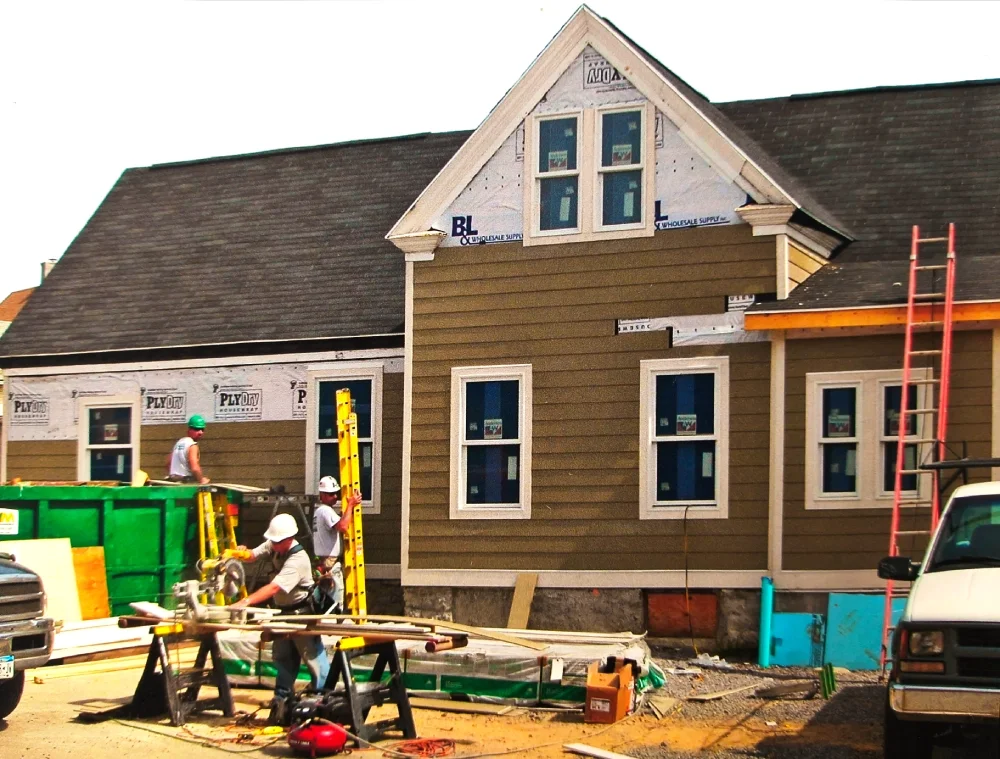
Putting on new siding and windows.
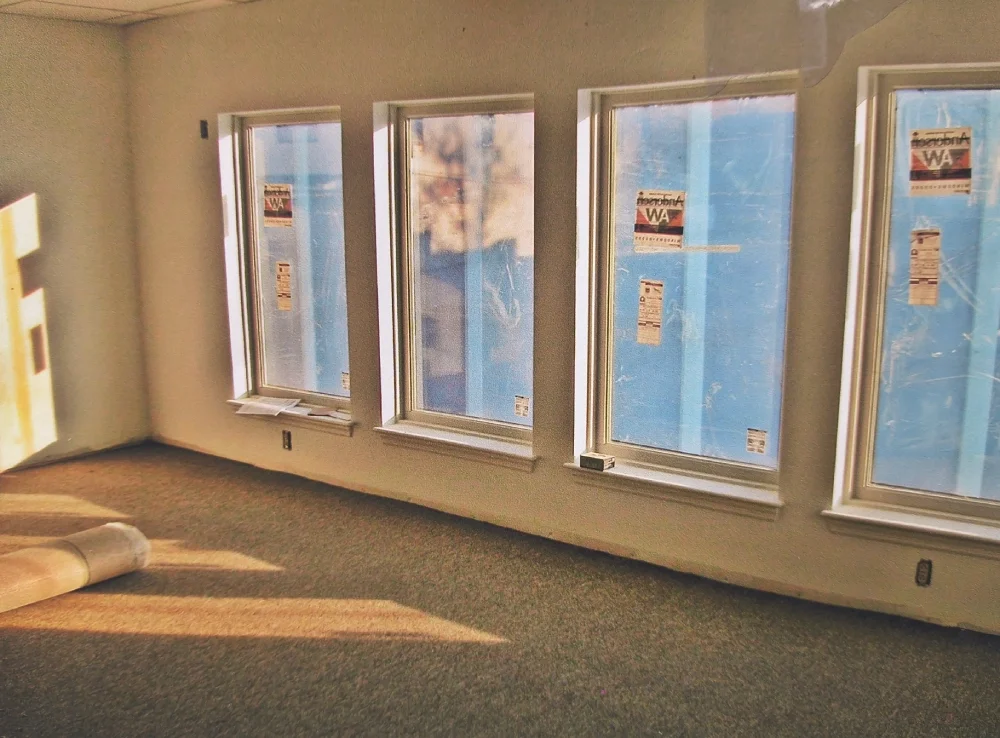
Beautiful double pane windows.
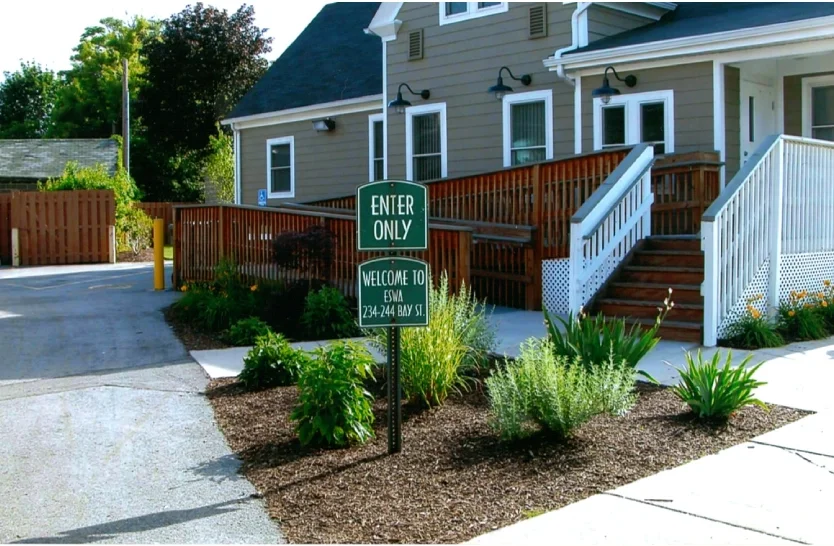
The new Benefit Office and new landscaping.
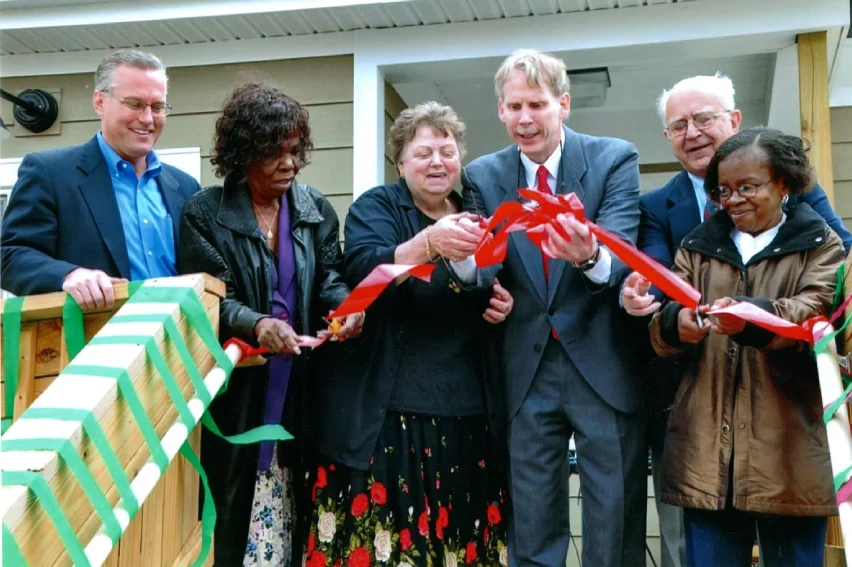
The ribbon cutting ceremony for the Benefit Office (left to right): President and CEO of LeChase Construction Bill Goodrich, ESWA Advisory Committee member Shirley Sapp, ESWA Advisory Committee member Trudy Harper, ESWA Advisory Committee president Mark Horn, volunteer architect Pete Romeo and ESWA Advisory Committee member Frances Murphy.
2017
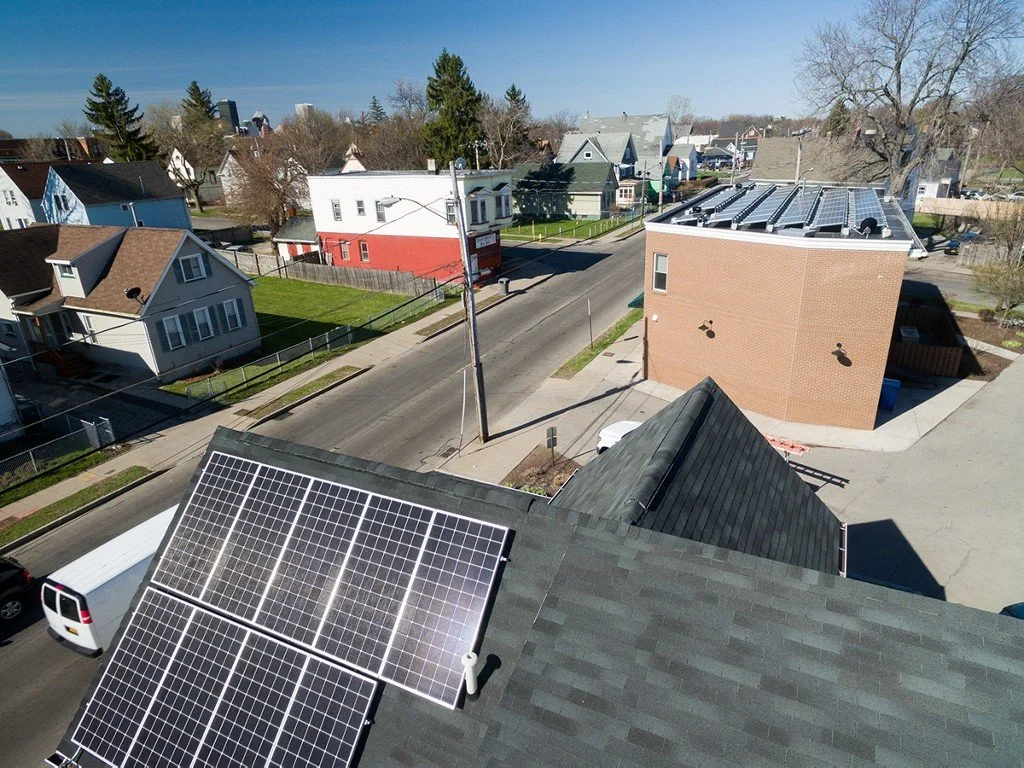
ESWA Goes Solar!
ESWA installs solar panels on the roofs of both Office Central and our Benefit Office. With the addition of a charging station for electric vehicles, this is a material demonstration of our leadership in sustainability, while we expand our campaign to demand our government fully implement the 2030 Sustainable Development Goals.
2020
ESWA Responds to Pandemic
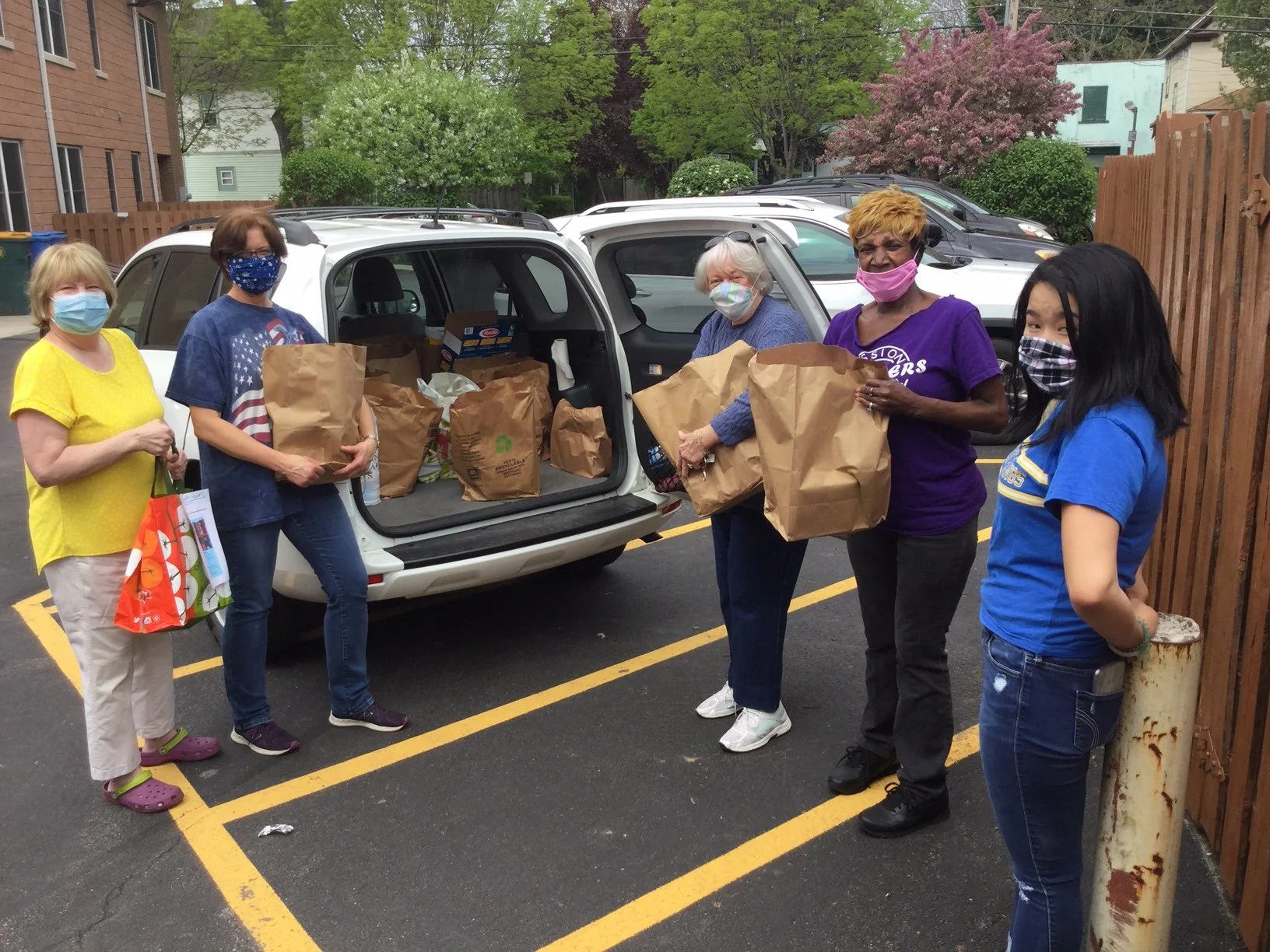
ESWA volunteers lead local relief efforts during the pandemic. The office not only stays open seven days a week throughout the pandemic, without exception – daytimes and evenings – but fills a record number of requests from members for food, clothing, preventive medical care and other vital supplies through ESWA’s self-help membership benefit program.
2025
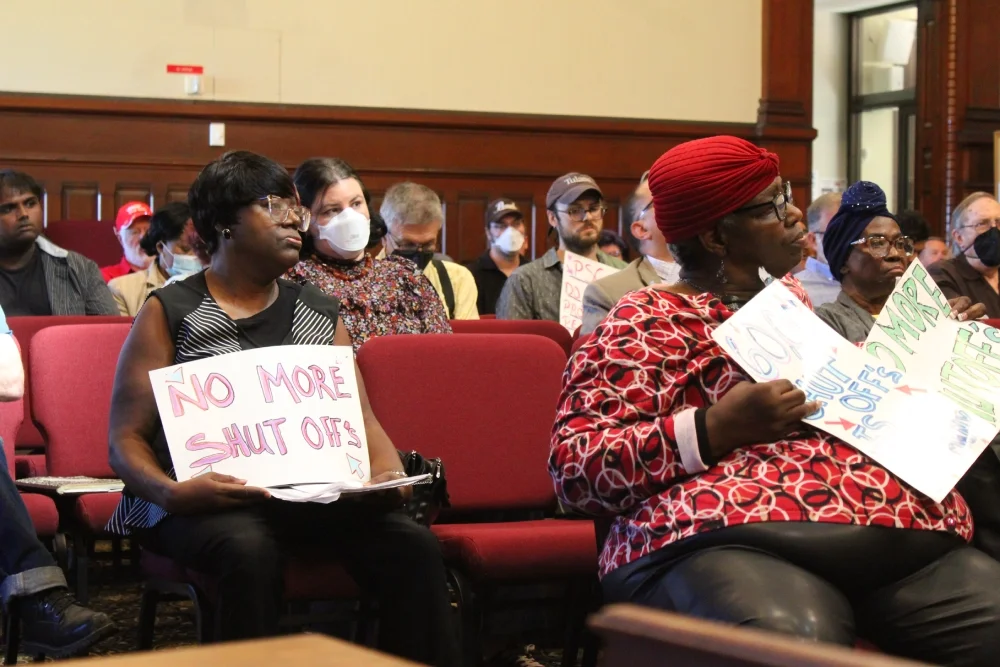
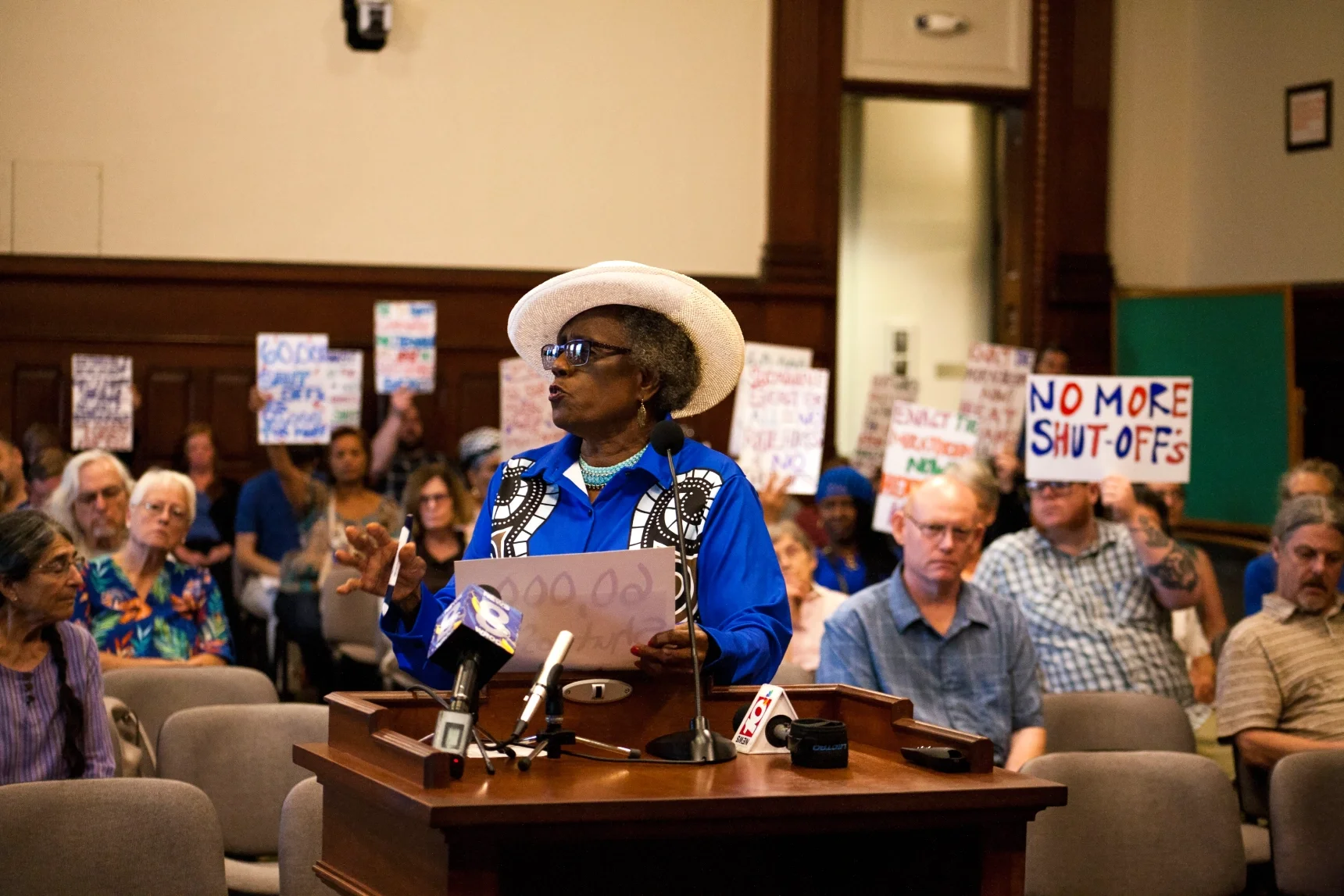
WBC’s Utility Fight Continues
Monroe County Workers Benefit Council (WBC) delegates and their allies testify at hearings of the New York State Public Service Commission on August 30, 2025, building on a two-decade-long fight against utility profiteering. The fact that state officials increasingly echo this message demonstrates how the WBC has become the leading force demanding the state comply with its mandate to provide safe, reliable and affordable utilities. Over the last 18 years, the WBC’s leadership has been instrumental in cutting a total of $1.6 billion from rate hikes requested by RG&E and NYSEG. Add your participation to the effort and make it even stronger!